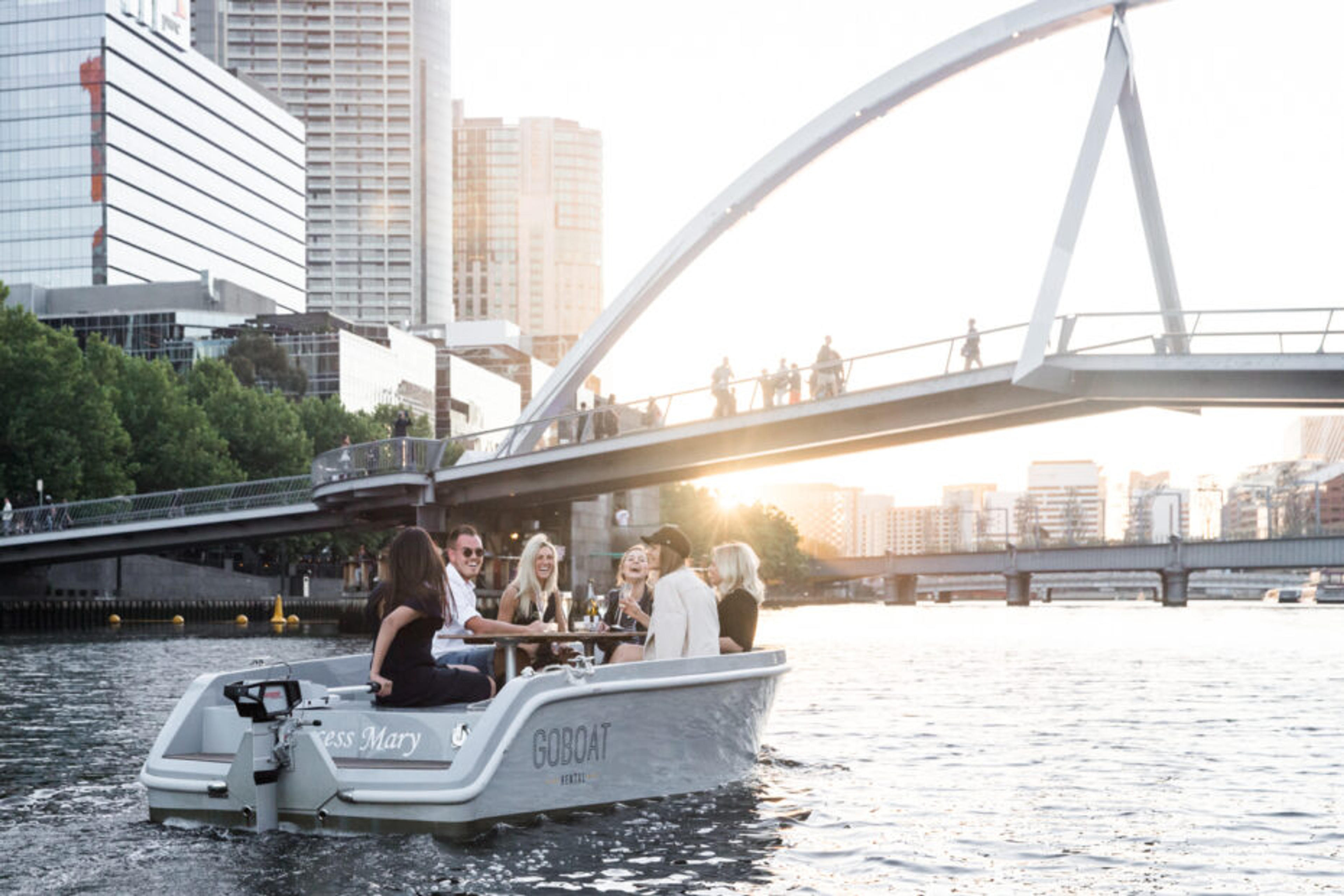
Photo: Abdellah Ihadian https://instagram.com/mr_babdellahn
Boat trip in Copenhagen: Rent a boat and experience the city's iconic statues

By ahmadmejel
Last updated October 20, 2026
We all know the feeling of running out of ideas and lacking inspiration for what to do Copenhagen is filled with fascinating statues and sculptures that tell stories ranging from fairy tales and mythology to royal history. But did you know that many of the city’s most famous statues are best experienced right from the water? When you rent your own boat and sail through the canals, you’ll get a completely unique and unobstructed view of the capital’s most iconic works of art. Here, we’ve compiled a list of the most remarkable statues in Copenhagen Harbor that you can sail past at your own pace.
1. Agnete and the Merman
Agnete and the Merman is perhaps the most surprising sculpture on the tour, because it’s located below the water’s surface. Right by Højbro Bridge, off the Stock Exchange and Christiansborg Palace, the bronze figures of the Merman and his many sons stand on the canal’s bottom with their arms outstretched toward the light. The sculpture was created by Suste Bonnén in 1992 and illustrates the well-known Danish folk ballad motif of Agnete, who chooses to leave her merman and their children to return to the human world on land. As you sail quietly past the statues, look down at them. Do not sail directly over them, as this risks damaging both the statues and your boat. In the evening, the sculpture is even illuminated from below, creating a very special, mystical atmosphere.
Click here to find Agnete and the Merman statue on the map
2. Christian IV
Off the Børsen and Christiansborg stands the statue of King Christian IV (1577–1648), cast in bronze by the sculptor Ville Bississen. The statue honors one of the most prominent monarchs in Danish history. Christian IV is known as the “City King” of all Denmark. He oversaw the construction of historic buildings such as the Stock Exchange, the Round Tower, and Holmen’s Church, and he also founded Christianshavn and dug the canals that today characterize inner Copenhagen. The statue captures the king’s proud and majestic appearance in the Renaissance style. From the water, it can be seen from the Slotholm Canal and the intersection at Inderhavnen as you sail past the Stock Exchange and Christiansborg Palace.
3. The B&W Worker
At Børnehusbroen in Christianshavn stands a sculpture of a shipyard worker from Burmeister & Wain (B&W). The work was created by sculptor Jens Galschiøt as a tribute to the working class that shaped the neighborhood for more than a century. The sculpture depicts a so-called “blue man” dressed in overalls, resting against the railing and gazing out over the water toward the defunct shipyard on Refshaleøen. From a boat in the Christianshavn Canal, you can see it up close, as it stands right up against the railing of the bridge spanning the canal. It represents the hard work, camaraderie, and pride among the thousands of craftsmen who built ships for the entire world and laid the foundation for modern Copenhagen.
Click here to find The B&W Worker statue on the map
4. Michelangelo’s David
In front of the Vestindisk Pakhus on Larsens Plads stands a reinterpretation of Michelangelo’s world-famous Renaissance sculpture, David. The statue is an exact bronze replica of the original marble statue from 1504, which stands in Florence. From the water, it is clearly visible along the harbor promenade and is one of the absolute largest and most striking statues you can see from the ship. The sculpture depicts the biblical hero David, preparing to battle the giant Goliath with his slingstone slung over his shoulder. The replica’s location on the waterfront belongs to the Royal Cast Collection and showcases classical sculpture in a rugged, maritime setting.
5. The Gefion Fountain
The Gefion Fountain, located near Kastellet, is Copenhagen’s largest monument and was created by sculptor Anders Bundgaard between 1897 and 1908. The monument depicts the Norse goddess Gefion guiding her four oxen in front of a plow. The sculpture illustrates the mythological legend of the creation of Zealand. The legend tells that the Swedish King Gylfe promised Gefion all the land she could plow out of Sweden in a single day. She transformed her four sons into strong oxen and plowed a vast tract of land out into the sea, which then became the island of Zealand, while the gap left in Sweden became Lake Mälaren. As you sail north toward Langelinie, you can see the Gefion Fountain on your left, right next to the English Church.
Click here to find The Gefion Fountain on the map
6. The Little Mermaid
Perched on her rock at Langelinie sits Denmark’s most famous sculpture, The Little Mermaid. The figure was created by sculptor Edvard Eriksen and unveiled in 1913, commissioned by brewer Carl Jacobsen, who was captivated by the story at the Royal Theater. The statue is based on H.C. Andersen’s timeless fairy tale of the same name from 1837. The fairy tale tells the story of a young mermaid who falls in love with a human prince and gives up her voice and her life in the sea to gain human legs and an immortal soul. The statue captures her slightly sad and wistful gaze as she sits there looking out over the water.
7. The Genetically Modified Paradise
A few hundred meters from The Little Mermaid stands the sculpture group The Genetically Modified Paradise, created by sculptor Bjørn Nørgaard for the World’s Fair in Hanover in 2000.
The sculpture includes, among other things, a surreal and distorted version of The Little Mermaid. The work is a socially critical commentary on genetic engineering, modern science, and humanity’s attempts to manipulate and reshape nature and classical beauty. From the water, the statue can be seen on your left at Langeliniekajen, a short distance before the original Little Mermaid.
Click here to find The Genetically Modified Paradise on the map
Related Articles