Aarhus Harbor: from trading port to recreational harbor

Aarhus Harbor has been developing since the 1800s, but in the last few years things have moved fast, and the plans for the future look set to take off. The plan is to make the harbor more recreational and sustainable and to bring biodiversity, the variety of living nature, into play.
How did Aarhus Harbor come about?
Before we get to where Aarhus Harbor is today, we need to go back in time to understand where it started. Aarhus Harbor was founded in 1845, which opened up much bigger opportunities for trade. Growing trade in goods like grain, spices and iron led to a bigger demand for workers in the city, and the population of Aarhus exploded.
During the first half of the 1900s, industry and the harbor dominated Aarhus, and the harbor was expanded several times. After those expansions, Aarhus Harbor is now Denmark's largest commercial port.
From the 1800s until today, Aarhus Harbor has changed a lot. It has gone from a trading port to a new place for everyone to spend time. Today, three distinct natural areas close to central Aarhus make up the city's nature and recreational resources: Ådalen, Risskov and the Marselisborg forests. All three are landscapes close to the city that locals know well as green, pleasant everyday places. But Aarhus is missing a fourth area, the blue piece of the puzzle, which the harbor is meant to fill.
From trading port to recreational harbor
According to aarhus.dk, the vision for the future of Aarhus Harbor is to create "Aarhus Blueline Park", a recreational and natural addition to Aarhus. The park will celebrate the meeting with the sea and its natural qualities. It will be an addition to the existing Aarhus Harbor.
A sustainable Aarhus
The plan is a more sustainable environment with a smooth transition between the city and the harbor landscape. In this transition, there will be a change in space, materials and climate. Biodiversity will also play a big role. Biodiversity has long been under pressure in Aarhus, but Aarhus Blueline is a chance to strengthen it on land and in the water. New habitats, areas
where plants and animals can live, will be added. The stronger biodiversity will bring more artificial landscapes to the park. Coastal life in Aarhus faces tough conditions, so it takes robustness, both in design and function. That has led to the development of bioblocks, specially designed concrete blocks meant to strengthen biodiversity and water quality in Aarhus Blueline. The artificial dune blocks and dune landscapes don't just help plants and animals. They also create public spaces with room for play and learning. That way, sustainability and biodiversity help secure the future.
Molslinjen's new location
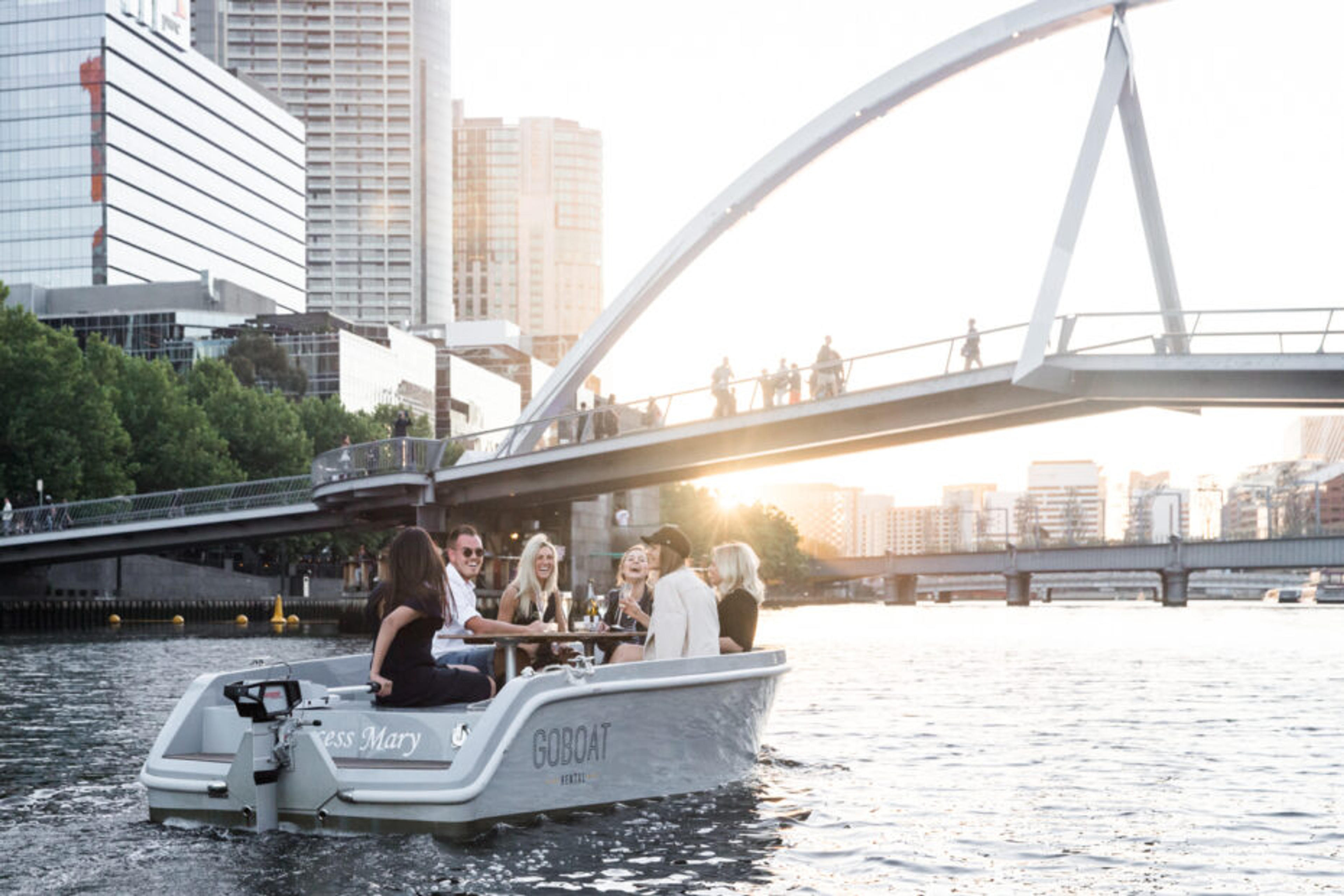
As part of making the harbor more recreational, the Molslinjen ferry has moved. Since November 2020, the ferries have sailed from the new ferry terminal at Østhavnen, which has freed up space for new recreational activities in the old area. GoBoat started here on Pier 2 in 2022 and moved in 2025 about 100 meters to the bridge over to Pier 2.
Aarhus Harbor's new location
The new urban space can bring joy to people who use the water for fishing, rowing or diving, people who enjoy a Sunday walk with a packed lunch, and people who want to run the 2-km route in the city park. The urban landscape has smaller spaces, framed views, paved areas, shade, shelter and small green pockets. The harbor landscape, on the other hand, is defined by practicality, large open spaces, wind, sun and shade, and paved surfaces. The goal of Aarhus Blueline Park is to combine the two landscapes into one attractive park that will draw locals, tourists, nature lovers, kids and adults. The park is meant to be a place to explore that thrives and develops where city, harbor and sea meet.
Experiences for all generations
Aarhus Blueline Park will offer activities and experiences for all generations, kids, adults, locals and tourists, and new kinds of spaces you don't find anywhere else in the city. Here, the edge between land and water becomes part of the experience, and the city, harbor and sea come together as one.
Read more about more sights in Aarhus

Andrew Rogala
A harbor developing over many years
The harbor is being developed in several stages, in a project that runs over many years. Besides the recreational areas, the plans include an expansion of Yderhavnen (the outer harbor) and a more efficient container terminal at Østhavnen.
The UN Sustainable Development Goals and Aarhus Harbor
The new recreational harbor in Aarhus doesn't only add a new urban space, biodiversity and sustainability. The new part of the harbor also supports some of the UN's 17 Sustainable Development Goals.
Read more about sights at Aarhus Harbor
Decent work and economic growth
The UN's Goal 8 is to promote sustained, inclusive and sustainable economic growth, full and productive employment and decent work for all. The aim is full and productive employment and decent jobs for all women and men by 2030. Aarhus Harbor helps support this goal. A 2017 analysis from the University of Southern Denmark showed that Aarhus Harbor creates almost 10,000 jobs and about DKK 6 billion in added value a year.
Industry, innovation and infrastructure
The development of Aarhus Harbor also supports Goal 9, which is about building resilient infrastructure, promoting inclusive and sustainable industrialization and supporting innovation. Ongoing investment in infrastructure and innovation is important for economic growth and development. More than half of the world's population lives in cities, so
mass transit and renewable energy become important. Growth will also matter for new industries and information and communication technology.

Andrew Rogala
Sustainable cities and communities
Making cities, communities and settlements inclusive, safe, resilient and sustainable is Goal 11. Today more than half of the world's population lives in urban areas. By 2050, that number will have grown to 6.5 billion people, two thirds of the world's population. Making cities safe and sustainable means being able to guarantee access to safe and affordable housing
and upgrade housing in slums. Sustainability also means investing in public transport, creating green public spaces and improving urban planning and management.
In 2021, about 350,000 people lived in Aarhus Municipality, and the population is expected to grow by 5,000 a year. That means more harbor activity and more work on being a good neighbor.
Responsible consumption and production
Goal 12 is to ensure sustainable consumption and production. Along with economic growth and sustainable development, we need to reduce our footprint on nature as fast as possible. We can do that by changing the way we produce and consume goods and resources.
When Ydermolen (the outer pier) in Aarhus Harbor is built, the options for sustainable energy production with a solar panel island will be looked into. Yderhavnen will also be built using soil from construction projects, so the project relies on reuse as much as possible.
Life below water
Goal 14, the last goal Aarhus Harbor supports, is to conserve and sustainably use the world's oceans and their resources.
The world's oceans, their temperature, chemistry, currents and life, drive the global systems that make the earth livable for humans. It's important to manage these vital resources, since they can be crucial for people, and climate change brings risks.
The Aarhus City Council has started work on a vision for using Aarhus Bay, where the harbor will play a central role.
Frequently asked questions
Can you go sailing in Aarhus Harbor?
Yes. GoBoat started in Aarhus in 2022. Read more about sailing with GoBoat in Aarhus here.
What are the plans for Aarhus Harbor?
The development of Aarhus Harbor is a long process that runs over many years and several stages. The plans include an expansion of Yderhavnen, a more efficient container terminal at Østhavnen and Aarhus Blueline, which will strengthen biodiversity and create new recreational areas by the water.
Related Articles